About Course
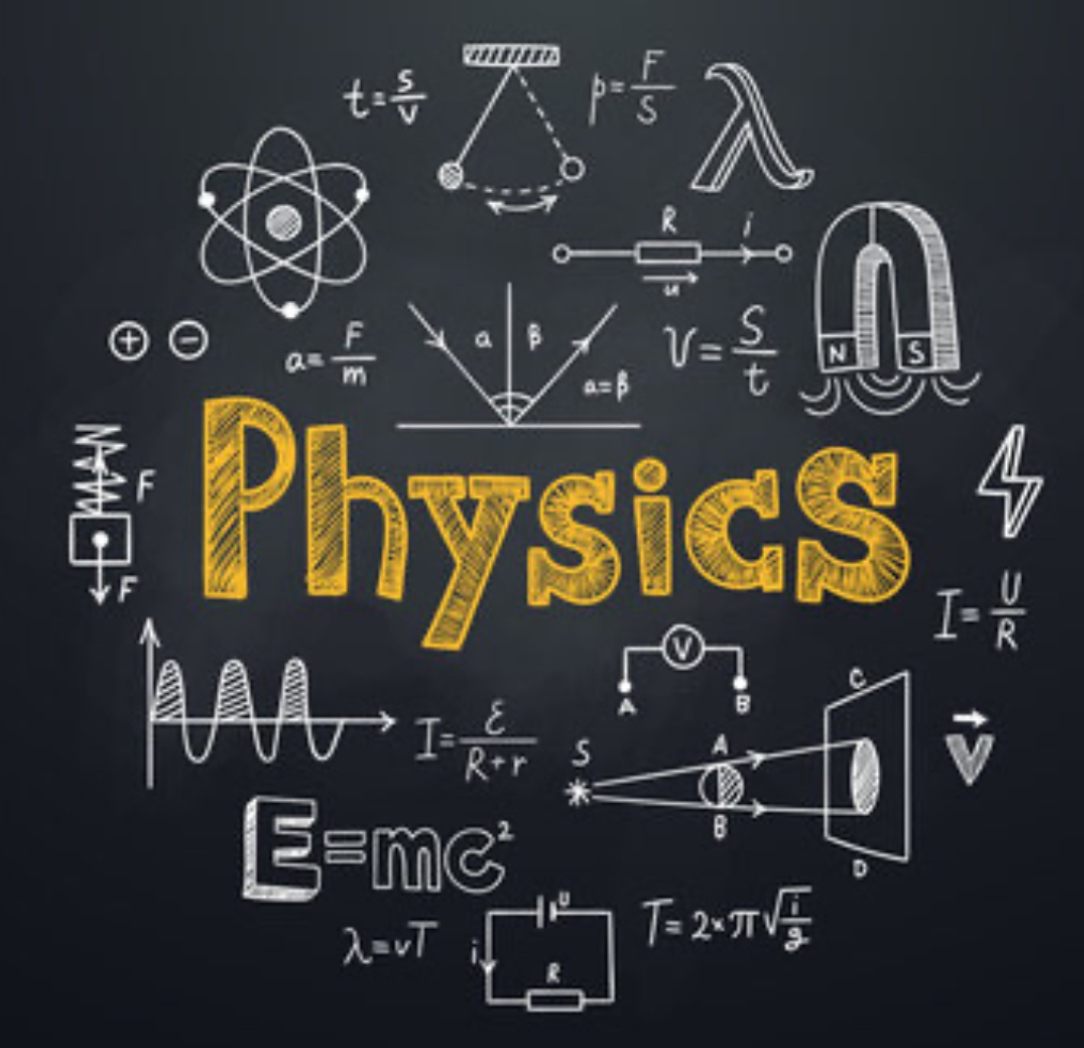
Physics explores how things move, how energy works, and how electricity powers our world, using clear explanations and exam practice to build confidence and success💫⚡️
What Will You Learn?
- Strong understanding of Physics concepts aligned to the IGCSE syllabus
- Improved problem-solving skills through guided practice and worked examples
- Confidence in applying formulas accurately in exams
- Better time management during Physics exams
- Increased confidence in answering structured and extended questions
Course Content
PHYSICS FORMULA SHEET, DEFINITIONS AND SUMMARY NOTES
-
Physics formula sheet
23:16 -
Physics Definitions and Principles
-
Topical summary notes
Topic 1: MOTION, FORCES AND ENERGY
In IGCSE Physics, motion, forces and energy introduce the basics of mechanics. Motion involves describing how objects move using distance, speed, velocity, acceleration and interpreting motion graphs. Forces focuses on balanced and unbalanced forces, Newton’s laws, momentum, density, pressure, friction and air resistance. Energy covers different energy stores, energy transfers, work, power and efficiency, helping students understand how movement and energy are connected.
-
Physical Quantities and Measuring Techniques
-
Motion
-
Mass, Weight and Density
-
Pressure
-
Effects of Forces
-
Moments
-
Momentum
-
Energy, Work and Power
-
Energy Sources
-
Energy, Work and Power (MCQ) worksheet 1
-
Energy, Work and Power (theory) worksheet 1
-
Energy, Work and Power worksheet 2
-
Energy, Work and Power worksheet 3
Topic 2: THERMAL PHYSICS
Thermal expansion is when a substance increases in size when heated and contracts when cooled. This happens because heating gives particles more kinetic energy, so they move faster and further apart.
• Solids expand the least, liquids more, and gases the most.
• Expansion can cause problems, so gaps are left in bridges, railway tracks, and buildings.
• It is also useful in thermometers.
Key idea: Heating makes particles move apart, causing expansion.
-
Thermal Physics summary notes
-
Kinetic Particle Model of Matter
-
Kinetic Particle Model of Matter (theory) Worksheet 1
-
Kinetic particle model of matter (MCQ) Worksheet 1
-
Thermal Properties and Temperature
-
Thermal Properties and Temperature (theory) worksheet 1
-
Thermal properties and temperature (MCQ) worksheet 1
-
Thermal properties and temperature (theory) worksheet 2
-
Thermal properties and temperature (MCQ) worksheet 2
-
Transfer of Thermal Energy
-
Transfer of Thermal Energy (MCQ) worksheet 1
-
Transfer of Thermal Energy (MCQ) worksheet 2
Topic 3: WAVES
In IGCSE Physics, waves covers the nature and properties of both transverse and longitudinal waves. Students learn about wavelength, frequency, amplitude, and wave speed, as well as wave behaviour such as reflection, refraction, diffraction and interference. The topic also includes the electromagnetic spectrum and the uses and risks of different types of radiation.
-
General Properties of Waves
-
Light
-
Electromagnetic Spectrum
-
Sound
-
Waves MCQ Worksheet
Topic 4: ELECTRICITY AND MAGNETISM
This topic explores how electricity flows, how circuits work, and how electricity and magnetism are connected. Students learn key laws, formulas, and real-life applications used in everyday electrical devices and power generation.
What you will learn:
* What electric current, voltage, resistance, and power mean
* How to use Ohm's Law (V = IR) and other key equations
* How series and parallel circuits work
* Electrical safety in the home and laboratory
* Magnetic fields, permanent magnets, and electromagnets
* How electricity and magnetism link through electromagnetism
* How motors, generators, and power stations
-
Simple Phenomena of Magnetism
-
Simple Phenomena of Magnetism (Theory) Worksheet
-
Simple Phenomena of Magnetism (MCQ) Worksheet
-
Magnetism and Electromagnetism
00:00 -
Electricity
-
Electrical quantities (MCQ) worksheet
-
Electrical quantities (theory) worksheet
-
Electric circuits (MCQ) worksheet 1
-
Electric circuits (theory) worksheet 1
-
Electromagnetic Effects
00:00 -
Electromagnetic Effects (theory) worksheet 1
-
Electromagnetic effects (MCQ) worksheet 1
-
Electromagnetic Effects (theory) worksheet 2
-
Electromagnetic effects (MCQ) worksheet 2
-
Electromagnetic Effects (theory) worksheet 3
-
Electromagnetic Effects (MCQ) worksheet 3
Topic 5: NUCLEAR PHYSICS
In IGCSE Physics, nuclear physics focuses on atomic structure, radioactivity and nuclear reactions. Students learn about the composition of atoms, types of radiation (alpha, beta and gamma), their properties, and how radioactive decay occurs. The topic also covers the uses of radioactivity in medicine and industry, as well as the dangers of radiation and how exposure is controlled.
-
The Nuclear Model of The Atom
-
The Nuclear Model of an atom (MCQ) worksheet
-
The Nuclear Model of an Atom (theory) worksheet
-
Nuclear Fission and Nuclear Fusion (MCQ) Worksheet
-
Nuclear Fission and Nuclear Fusion (theory) Worksheet
-
Atomic structure and Rutherford’s gold leaf experiment
00:00 -
Rutherford’s Scattering experiment worksheet
-
Radioactivity
-
Radioactivity (MCQ) Worksheet
-
Radioactivity (theory) worksheet
-
Radioactivity worksheet 2 (MCQ and Theory)
-
Radioactivity Worksheet 3 (MCQ and Theory)
Topic 6: SPACE PHYSICS
In IGCSE Physics, space physics introduces the Solar System and the wider Universe. Students learn about the planets, moons, stars and galaxies, as well as the life cycle of stars and the effects of gravity in space. The topic also includes orbits, satellites and redshift, helping explain how astronomical objects move and how the Universe is expanding.
-
Earth and The Solar System
-
Stars and The Universe
PAPER 6 ALTERNATIVE TO PRACTICAL
IGCSE Physics Paper 6 (Alternative to Practical) is designed to test a student's experimental skills rather than their ability to perform calculations from memory. Since they won't be in a lab during the exam, they need to demonstrate that they understand how a lab should function.
-
Paper 6 Tips and strategies
-
Planning experiments and improving techniques
-
Identifying Dependent and Independent Variables
-
Planning and designing experiments worksheet 1
PAPER 2 MULTIPLE CHOICE
-
MCQ paper 1
-
MCQ paper 2
-
MCQ paper 3
-
MCQ paper 4
-
MCQ 5
-
MCQ 6
-
MCQ 7
PAPER 4 THEORY
-
Theory paper 1
Student Ratings & Reviews

No Review Yet